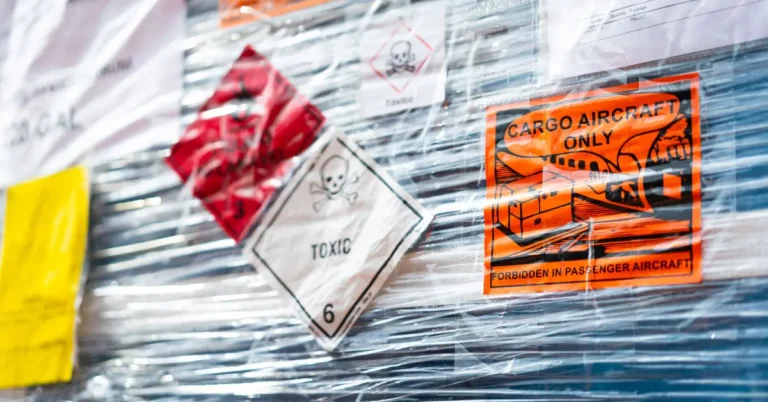
Hospital Information System Labels: What to Decide Before You Print
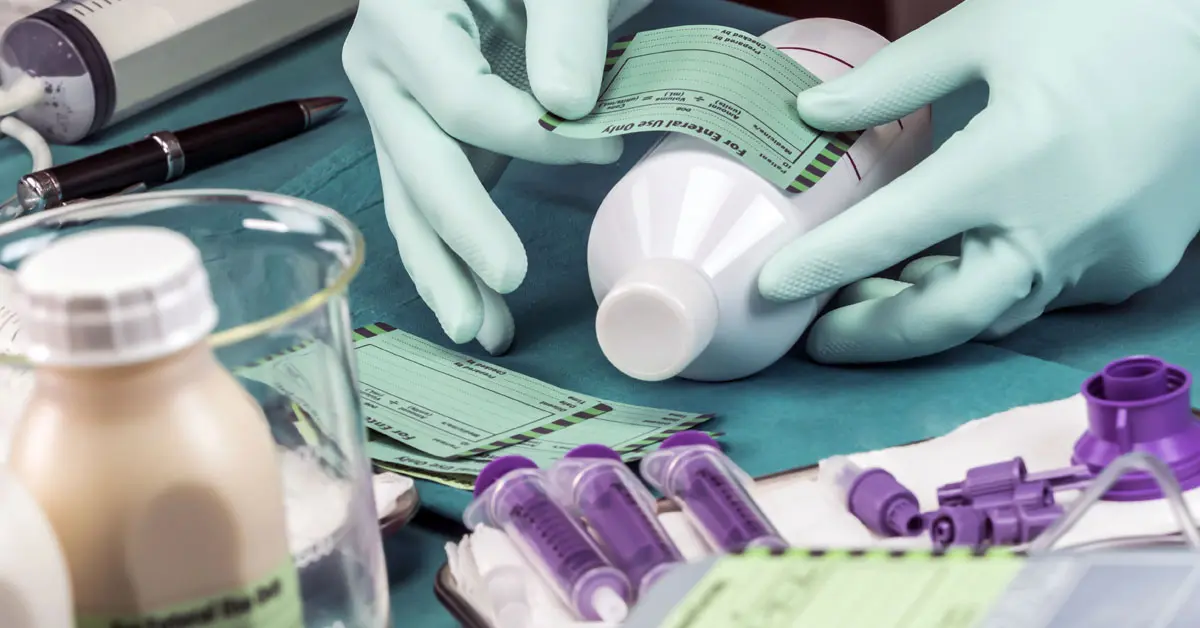
Hospital information system labels convey crucial information. The label isn’t just an identifier. It’s also an important tool in the chain-of-custody for a patient sample or medication.
When a spec is wrong, the cost isn’t just the need to “reprint a label.” It can mean a lost sample, wasted medication, or a misidentified patient. In other words, much more than a label. Here’s what you should know to get hospital information system label specs right.
Key Takeaways
- Most hospital labels are direct thermal (unless pre-printed).
- Your hospital information system doesn’t dictate your label spec, the physical requirements from your actual environment do.
- Label failure is usually quiet, not dramatic, but the cost is real: lost sample custody means retesting and failed medication labels mean wasted product.
- Ask whether anything about the application is out of the ordinary. Bring a physical sample of your current label.
Where Hospital Labels Live
In the medical world, hospital labels usually serve many departments. However, three big areas are:
- Laboratory: In the lab, you’ll find specimen tracking labels. These consist of barcode labels on vacutainers and blood samples, plus slide labels sent to pathology. Some labs rely on pre-printed barcode labels for specimen collection.
- Pharmacy: IV bag labels and prescription labels keep things clear. Each label is tied to a specific patient and generated when an order comes through. That label travels with the medication to the patient or patient’s room.
- Central Service: The catch-all department for many things non-medication related. It calls for charge labels, billing and inventory tracking labels, and labels for organization.
Ultimately, every single label in every department of a hospital does a distinct and critical job. They exist to ensure continuity of care. The label needs to tie the specimen, medication, or procedure back to the patient. If one thing goes awry, critical information can get lost for disastrous results.
What a Medical Label Must Survive in a Lifetime
Durability is crucial in the world of hospital labels. Labels can see many different and hazardous conditions over their lifespan. An important part of getting specs correct at the beginning is being able to envision the entire process.
- Refrigeration and freezer storage: Most labels applied at room temperature can hold up just fine in cold storage. That’s because of all-temperature adhesives. Prescription labels go through cold storage most often.
- Chemical and alcohol exposure: Some hospitals request alcohol- and disinfectant-resistant labels. It may not always be needed, but it’s worth considering in the life of your label.
- Chemical baths: Taking the chemical exposure to another level, pre-printed slide labels must be highly resistant to chemicals. The slides are often dipped in Xylene bath or exposed to other chemicals. They must stay legible and affixed.
- Handling: “Glove permanent” adhesives are specially formulated not to stick to medical gloves. This can make a huge difference in a clinical setting, where a label stuck to the wrong place is a hazard.
- Food contact: Patients need to eat, and direct food contact can be fairly common in a hospital. FDA-approved adhesives are available for labels that come in contact with consumables over their lifetime.
Direct Thermal vs. Thermal Transfer: Which is Best for Hospital Information System Labels?
The most common materials utilized with information systems in a hospital are direct thermal and thermal transfer. What’s the difference?
With direct thermal labels, there’s no ribbon required for printing. However, the image that appears on the label often fades over time. That said, there have been real strides made in durability in recent years, and now direct thermal labels are becoming the default option for most applications.
Thermal transfer labels are the other option. These rely on a ribbon for printing and are more durable with a longer-lasting imprint. These are the standard labels for situations when a label needs to last.
Matching Labels to Hospital Information Systems
Those familiar with hospital labs have likely heard the names Cerner, Sunquest, Meditech, and Mysis. These laboratory information systems (LIS) are critical for tracking samples, but the systems are often misunderstood when it comes to labels.
One of the biggest misconceptions is that the software doesn’t dictate the label spec. Cerner and Sunquest coordinate when a label prints and what data should be on it (such as patient ID, sample type, timestamp, and barcode). However, the physical qualities and requirements of that label aren’t dictated by the LIS.
Conditions in lab and hospital environments sometimes require labels have to survive an -80°C freezer, face stock that won’t smear when it’s handled (with gloved and possibly chemical-exposed hands), or that the print has to stay scannable after a trip through a centrifuge and handling. None of this comes from the LIS; it comes down to what actually happens to the sample after the label prints.
A buyer might ask, “We run Sunquest, what label do we need?” And the honest answer is that it’s the wrong starting question. The right questions are about the sample’s real-world journey through refrigeration, freezing, chemical exposure, handling, and conditions. The information system tells you what data needs to go on the label, but your actual storage and usage conditions tell you what the label needs to be made of.
What Happens When the Spec Is Wrong?
Getting a label spec wrong doesn’t always mean total, dramatic failure. A label rarely falls clean off a sample in front of a lab tech. The more common failure mode is less pronounced—corners lift, edges curl, adhesive gives out just enough that the label shifts and the barcode won’t scan.
However, less pronounced label issues don’t mean the issues are low-stakes. A lab sample with a compromised label means lost chain of custody. When that happens, patients may need to be retested, results are delayed, and the added costs land beyond the lab onto the hospital.
A medication label that fails is worse. Unlike a sample, the medication can’t simply be re-labeled or reused. A failed medication label means product waste and extra costs, plain and simple.
Label failure is one of the most common ways new customers find their way to T&L Graphic Systems in the first place. Many of them have had a label fail somewhere else and witnessed the cost and hassle. They come looking for someone who will ask the right questions upfront instead of after the fact.
The One Label Question Buyers Forget to Ask
One question quickly separates a smooth label order from a costly redo: Is there anything about this application that might be out of the ordinary?
It sounds ridiculously simple, but that’s the question that captures what the standard intake forms miss. Unusual chemical exposure, non-standard mandrel sizes, or tighter-than-usual tolerances are exactly the types of details that slip through. Buyers assume their situation is “pretty standard” and don’t mention it. It’s not that anyone is hiding it on purpose; it’s just easy not to realize a detail is relevant until someone asks directly.
Asking this question upfront, before quoting or specifying anything, is what keeps a label from failing three months into a supply run instead of getting caught on day one.
You should make sure you do a little prep before requesting a quote. It goes a long way toward getting the right label the first time.
What to have ready before you request a quote:
- A physical sample of your current label and a description of its’ application.
- Any non-standard environmental exposure, including chemical exposure, cold-chain storage, or anything outside the typical.
- Inventory and volume requirements. Labels are often warehoused and released as needed. Knowing your needs upfront can cut lead times from weeks down to days.
- Any special adhesive requirements. Glove-permanent, all-temperature, chemical-resistant, or anything specific your team already knows it needs.
A final note on compliance: There’s no major compliance certification specific to hospital labels beyond what’s already standard for a hospital setting—for example, requirements like FDA food-contact approval for adhesives. If your application has compliance questions, raise them directly. For most hospital and lab testing needs, there’s not much further to navigate.
There can be a lot to know about label specs. Getting it right means making the best choices upfront, not trying to triage after a label failure. If you have questions, we’re here to help you get the labels you rely on for every application.
Reach out to our team with questions or to request a quote. We’ll make sure you get the labels you need for your hospital information system.